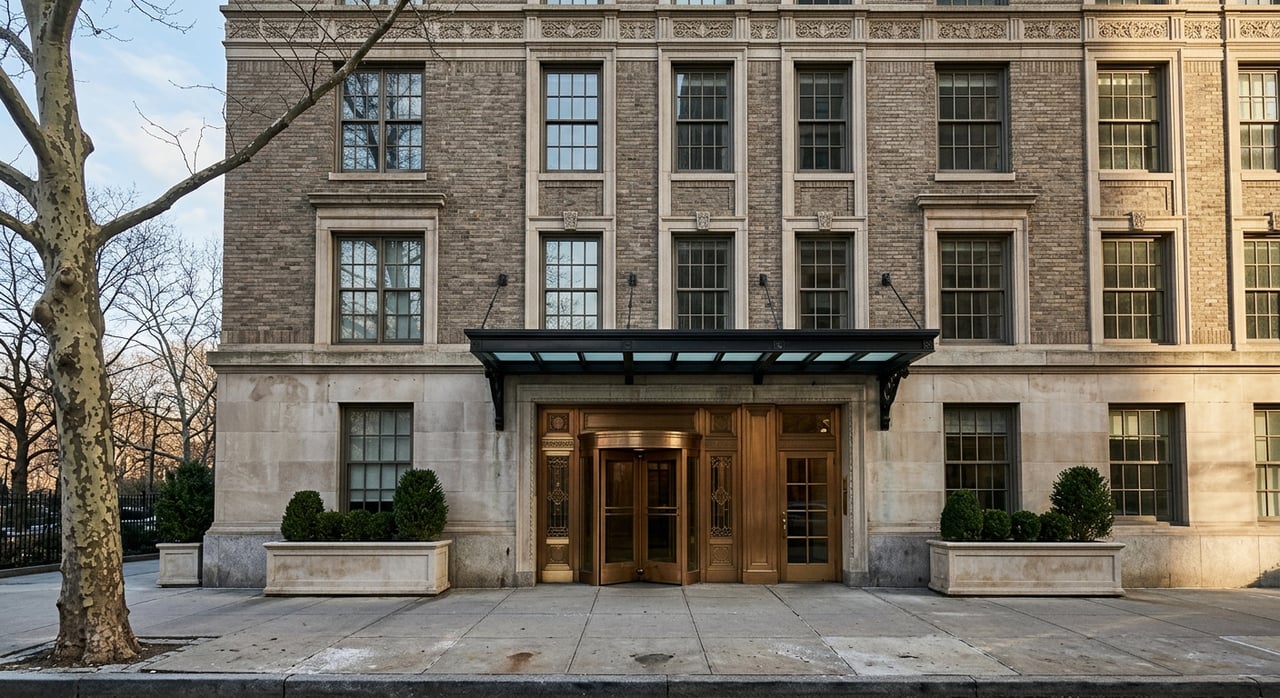
Thinking about a Manhattan home you can use when you need it, without committing to full-time living? Central Park South often rises to the top for exactly that reason. If you want a pied-à-terre that feels connected, convenient, and easy to lock up and leave, this corridor offers a rare mix of location, transit, and building options. Let’s take a closer look at why Central Park South can work so well, and what you should verify before you buy.
Why Central Park South fits part-time living
A pied-à-terre is a non-primary home used occasionally, and Central Park South aligns well with that lifestyle. The Columbus Circle area sits at the southwest corner of Central Park and serves as a practical launch point for museums, performing arts venues, retail, and park access. Nearby destinations include Carnegie Hall, MoMA, and Lincoln Center, giving you a strong Midtown and Upper West Side connection from one address base.
That kind of access matters if you are in the city for work, weekends, or seasonal stays. You can keep a smaller residential footprint while still being close to many of the places you may want to reach regularly. As The Shops at Columbus Circle neighborhood overview highlights, the area is built around central access to culture, shopping, and the park.
Transit access adds convenience
For many part-time owners, ease of arrival is just as important as the apartment itself. StreetEasy building pages along the corridor show access to the A, C, B, D, 1, N, Q, R, W, and F trains around 57th and 59th Streets, which supports efficient movement across Manhattan and beyond. That can make a real difference if you are coming in for a short stay and want to maximize your time.
In practical terms, good transit can reduce friction. You are not relying on one line or one route, and that flexibility often makes occasional ownership feel more usable. It is one of the reasons Central Park South stands out for buyers seeking a city base rather than a full-time residence.
Building type matters more than the address
One of the biggest misconceptions about pied-à-terre buying is that the street alone tells you whether a property will work. On Central Park South, the corridor includes co-ops, condos, condops, hotel-residence hybrids, and rental-only buildings. That range gives you options, but it also means you need to look closely at each building’s rules.
Current examples on the corridor include co-ops at 120, 150, 200, and 210 Central Park South; condos at 116 Central Park South, Essex House Residences at 160 Central Park South, and the Plaza residences at 1 Central Park South; a condop at 230 Central Park South; and rental-only product at 240 Central Park South. StreetEasy’s overview of pied-à-terre ownership notes that condos and some condops are often more flexible, while co-op policies can vary significantly by board and proprietary lease.
Co-ops can work, but rules vary
Some buyers assume co-ops are automatically a poor fit for part-time use. That is not always true on Central Park South. Research snapshots show pied-à-terre approval or comparable flexibility at buildings including 120, 150, 200, and 210 Central Park South, though each building should be reviewed independently.
The key point is simple: permission needs to be explicit or clearly supported by building practice and documents. A building that merely tolerates part-time use is not the same as one that affirmatively allows it. That distinction matters before you commit time, capital, and due diligence costs.
Condos and condops may offer more flexibility
For many pied-à-terre buyers, condos and some condops are attractive because they may allow more flexible ownership and occupancy structures. Current corridor examples suggest that 160 Central Park South has shown pied-à-terre flexibility and sublets allowed, while 230 Central Park South has been marketed as allowing immediate and indefinite subletting, pied-à-terres, investors, and LLC purchases.
Still, listings are snapshots, not permanent policy statements. What appears in marketing language should always be checked against the offering plan, bylaws, house rules, and any applicable board materials. A flexible headline means very little if the governing documents say something narrower.
Understand the real monthly cost
A pied-à-terre is often bought for convenience, but the carrying cost deserves a careful look. In New York City, monthly charges depend heavily on building type. StreetEasy’s guide to maintenance fees explains that co-op owners pay maintenance, condo owners pay common charges, and some condop-style charges can include taxes.
That difference is important when you compare options along Central Park South. For example, a current listing at 200 Central Park South shows maintenance of $3,588.69 with A/C included, while a listing at 230 Central Park South says maintenance includes real estate taxes. If you are evaluating part-time use, the right question is not just “What is the monthly number?” but “What does that number actually cover?”
Tax abatements may not apply
Some buyers look to the New York City co-op and condo tax abatement as a way to lower ownership costs. The city states that the abatement can reduce property taxes by 17.5% to 28.1% in eligible developments, but the unit must be the owner’s primary residence and the board applies on behalf of the building. You can review those rules through the NYC Department of Finance.
For a true pied-à-terre, that usually makes the abatement a poor fit. If the apartment is not your primary residence, you should be cautious about assuming those tax savings will apply. This is one of the clearest examples of why second-home math can differ from primary-home math.
Closing costs deserve early planning
Purchase price is only part of the picture. Buyers should also plan for New York City’s Real Property Transfer Tax, the state mansion tax on residential conveyances of $1 million or more, and mortgage recording tax if the purchase is financed. According to the NYC Department of Finance transfer tax guidance, co-op apartment mortgages do not incur mortgage recording tax.
That distinction can affect how you compare one building type to another. A co-op and a condo with similar asking prices may not have the same acquisition cost structure. For part-time buyers, understanding this early can help you set a more realistic all-in budget.
A policy item to watch
There is also a state-level policy issue worth tracking at the luxury end of the market. As of Governor Hochul’s April 15, 2026 announcement, the state’s pied-à-terre surcharge on luxury second homes over $5 million is a proposal, not an enacted building rule. You can review that status in the governor’s announcement.
For now, this is best treated as a watch item rather than a current operating expense. Still, if you are planning a purchase above that threshold, it belongs in your diligence checklist.
Short-term rental income is not the play
If you are considering a Central Park South pied-à-terre, it is best to evaluate it as a personal-use property first. New York City defines a short-term rental as fewer than 30 consecutive days and states that you cannot rent out an entire apartment or home for fewer than 30 days, even if you own or live in the building. Hosted stays are allowed only under narrow conditions, as outlined by the Mayor’s Office of Special Enforcement.
That means an Airbnb-style strategy is generally not the right lens for this market. Even if a building has some sublet flexibility, city rules still set the wider framework. For most buyers, the opportunity here is convenience and optionality, not short-term rental yield.
What to review before buying
No matter how attractive the location may be, the building documents should guide your final decision. The New York Attorney General recommends reviewing the offering plan carefully, along with board minutes and financial reports, to understand repairs, defects, and the building’s financial condition. You can see that guidance in the Attorney General’s co-op and condo buyer resource.
For a pied-à-terre purchase on Central Park South, focus your diligence on a few specific questions:
- Does the building expressly permit pied-à-terre use?
- Are sublets allowed, and what minimum term applies?
- Can ownership be held in an LLC or trust?
- What do the monthly charges include?
- Is any tax abatement available, or is primary residence required?
- What do the board minutes and financials reveal about upcoming work or costs?
A simple way to compare buildings
If you are choosing between multiple addresses, a side-by-side review can help:
| Topic | What to Confirm |
|---|---|
| Pied-à-terre use | Explicitly permitted, restricted, or only informally tolerated |
| Ownership structure | Individual, trust, or LLC ownership allowed or limited |
| Subletting | Whether allowed, approval process, and minimum lease term |
| Monthly charges | Taxes, utilities, staff, or other services included |
| Financial condition | Reserve strength, recent assessments, and planned capital work |
| Closing costs | Building-type differences, financing impact, and tax exposure |
This kind of comparison can prevent expensive surprises. It also helps you separate buildings that look similar on paper but operate very differently in practice.
The Central Park South takeaway
Central Park South is compelling as a pied-à-terre neighborhood because it combines park access, strong transit, and a mix of building types in one of Manhattan’s most connected locations. For the right buyer, it can offer exactly what a second home in the city should: convenience, flexibility, and access to the places you actually use.
The most important decision, though, is not the corridor alone. It is whether the specific building’s rules, fee structure, and ownership options match the way you plan to live. If you want help evaluating Central Park South buildings through that lens, Devin Hugh Leahy can help you compare options with a practical, building-by-building approach.
FAQs
Is Central Park South a good neighborhood for a Manhattan pied-à-terre?
- Yes. Central Park South stands out for part-time use because of its location by Columbus Circle, access to Central Park, proximity to cultural destinations, and broad subway connectivity.
Do all Central Park South buildings allow pied-à-terre ownership?
- No. Policies vary by building, and the governing documents matter more than the address itself.
Are condos better than co-ops for a Central Park South pied-à-terre?
- Not always, but condos and some condops are generally more flexible. Some Central Park South co-ops also permit pied-à-terre ownership, so each building should be reviewed individually.
Can you rent out a Central Park South pied-à-terre short term?
- Generally, no. New York City prohibits renting an entire apartment or home for fewer than 30 consecutive days in most cases.
Does a Central Park South pied-à-terre qualify for the NYC co-op or condo tax abatement?
- Usually not, because the tax abatement generally requires the unit to be your primary residence.
What should you check before buying a pied-à-terre on Central Park South?
- Review the offering plan, bylaws or proprietary lease, house rules, board minutes, financials, sublet policy, ownership structure rules, and the full monthly and closing cost picture.